On Donald Trump’s capricratic governance, marked by abrupt policy shifts, unpredictable actions, and decisions seemingly driven by personal whims rather than consistent principles or thorough analysis
Donald Trump’s presidency was a masterclass in governing by whim. His erratic decision-making, characterized by abrupt policy reversals, impulsive actions, and disregard for established norms, left both allies and adversaries bewildered. This style of governance, which I here term “capricracy,” undermined democratic principles and eroded public trust in the executive branch.
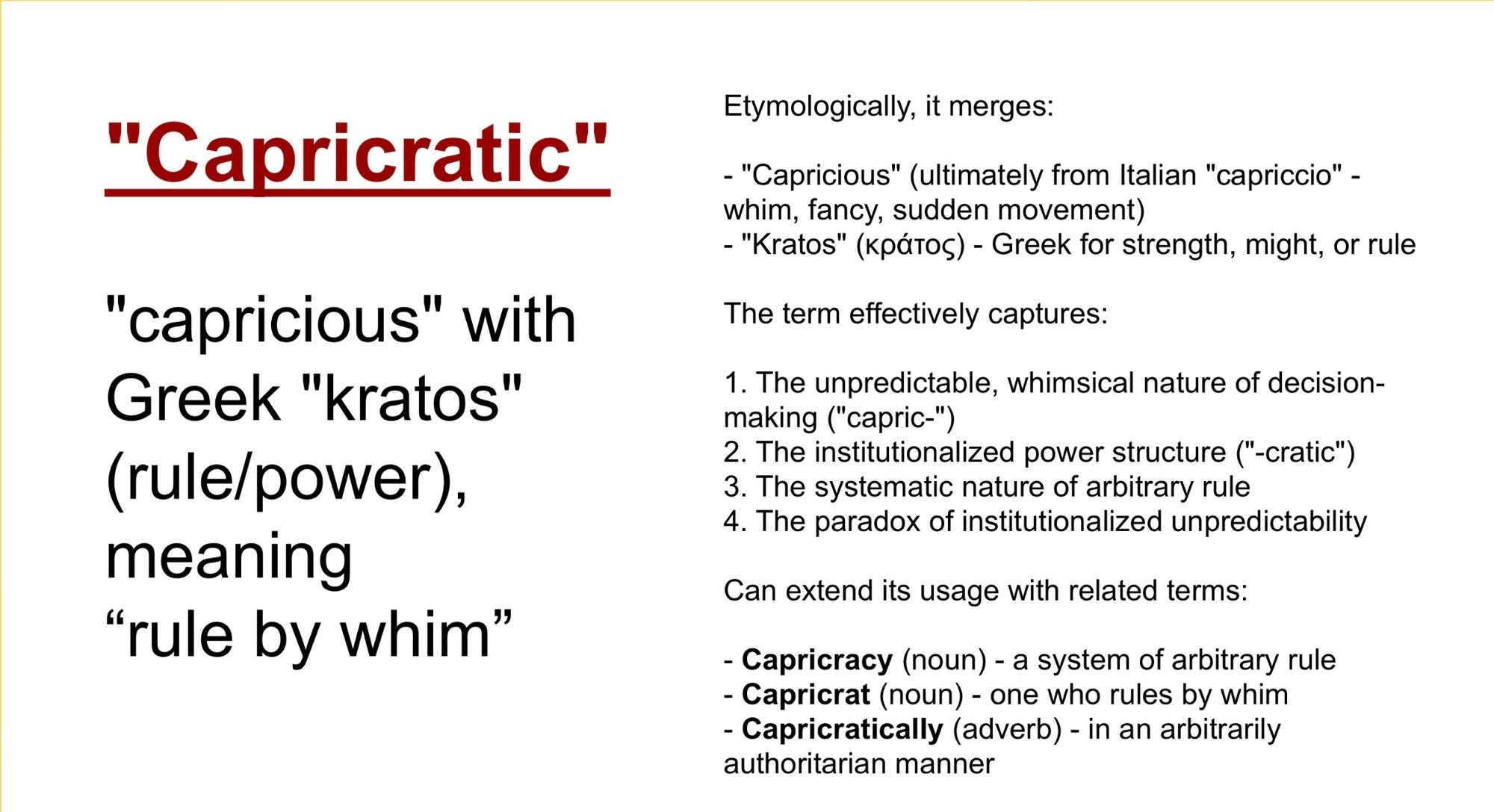
In the wake of Trump’s presidency, political analysts have struggled to categorize his distinctive style of governance that went beyond simple authoritarianism or populism. While terms like “authoritarian” or “strongman” capture aspects of his approach, they miss a crucial element: the deliberate wielding of whim as a tool of power. This phenomenon, which I’m calling “capricracy”—from the Latin “capricious” and Greek “kratos” (power)—represents a form of rule where unpredictability itself becomes a mechanism of control.
Key Point: While conventional autocrats typically build systematic mechanisms of control, the capicrat deliberately maintains institutional instability.
This is a brief post and intended to heuristically generate thought and discussion. I’m suggesting here that the concept of capricracy helps us understand how seemingly erratic leadership can serve strategic purposes. When Trump abruptly reversed course on family separation policy in 2018, shifting from “zero tolerance” to a hasty retreat within six weeks, it appeared simply impulsive. But viewed through the lens of capricratic governance, such reversals serve to keep both allies and opponents off-balance, making it difficult to mount organized resistance or even predict the next move.
Initial definition of “capricratic” and related terms.
Capricratic Governance
A hallmark of Trump’s capricracy was his penchant for sudden and unexpected policy shifts, often driven by special-interest pressures or personal pique. This unpredictability manifests in multiple ways. Consider Trump’s approach to foreign policy, where major diplomatic announcements often came via early morning tweets. His sudden declaration of a transgender military ban on Twitter blindsided military leadership and upended established policy-making processes. The attempted purchase of Greenland, proposed without diplomatic groundwork, similarly exemplified governance by whim rather than careful statecraft. At one point, TikTok was a threat, then it was supported.
More generally, the strategic value of this unpredictability becomes clearer when examining Trump’s handling of major policy initiatives. Perhaps we can consider a variety of statements and decisions:
● Abrupt Policy Reversals: Trump frequently reversed course on significant policies, often in response to public backlash or shifting political winds. Examples include the reversal of the family separation policy, the attempted rescission of DACA later deemed arbitrary and capricious by the Supreme Court, and the fluctuating stance on abortion policies. This created uncertainty and instability, making it difficult to predict or understand the administration’s direction.
● Impulsive and Unilateral Actions: Many of Trump’s decisions appeared impulsive and lacked thorough consideration or consultation with experts. His use of Twitter for major policy announcements, such as the transgender military ban, exemplified this impulsivity. The withdrawal from the Trans-Pacific Partnership and the imposition of tariffs on steel and aluminum imports were also criticized for their lack of strategic planning and potential negative economic consequences.
● Inconsistent and Contradictory Positions: Trump often exhibited contradictory positions on critical issues, leading to confusion and a perception of erratic decision-making. His fluctuating positions on vaping regulations, COVID-19 relief negotiations, and abortion demonstrate this inconsistency.
● Disregard for Established Norms and Processes: Trump frequently disregarded established norms and procedures, such as attempting to hold the G7 summit at his own resort, proposing the purchase of Greenland, and revoking security clearances for political opponents. These actions demonstrated a disregard for traditional diplomatic protocols and ethical considerations.
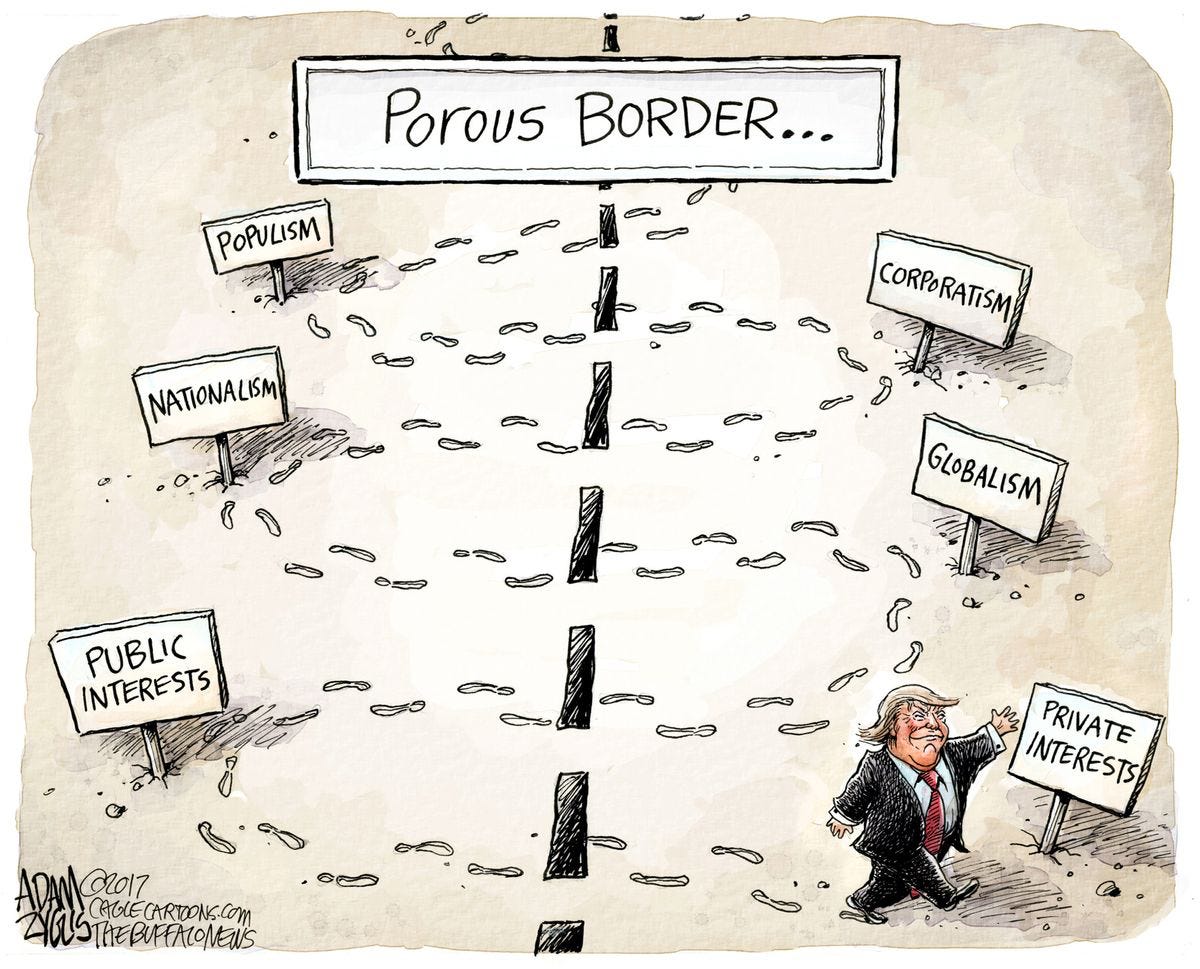
● Prioritizing Personal Interests and Political Gain: Several decisions, like the G7 summit at Doral, raised concerns about potential conflicts of interest and a prioritization of personal gain over public good. Appointing Elon Musk, a figure with extensive business interests, to a government efficiency panel further fueled these concerns.
● Use of Military Force for Domestic Issues: Trump’s threats to deploy military force to quell protests and for mass deportations raised significant concerns about the militarization of domestic issues and the potential for executive overreach.
Is this merely impulsive behavior? Such dramatic policy reversals served multiple purposes: they demonstrated the leader’s absolute power to change direction at will, exhausted opposition forces who struggled to respond to rapidly shifting positions, and created an atmosphere of continual uncertainty about what might come next. Whether consciously strategic or not, such decisions exemplify how capicratic governance bypasses traditional decision-making processes, keeping both allies and opponents perpetually off-balance.
Related Terms on Personal and Autocratic Rule
In this brief post, I do not suggest that I am entirely original in thinking about the dynamics represented in capricious governance.
For example, political scientist Rebecca Tapscott’s work on “institutionalized arbitrariness” helps illuminate how such apparently chaotic leadership can actually consolidate power. By creating an environment of constant uncertainty, where even basic policy positions might reverse overnight, capricratic leaders prevent opposition forces from coalescing effectively. Trump’s fluctuating positions on COVID-19 relief negotiations in 2020 exemplified this dynamic, as congressional leaders struggled to respond to positions that shifted dramatically from day to day.
The capricratic leader often leverages what scholar Xavier Márquez calls the “mobilization of charisma” – using personal appeal to bypass institutional constraints. Trump’s tendency to make major policy pronouncements at rallies, circumventing traditional channels, illustrates this approach. When he announced plans to impose steel and aluminum tariffs without the usual interagency review process, it demonstrated how personal whim could override established procedures.
● Mobilization of Charisma: This strategy leverages emotional attachments between a leader and followers to broaden the reach of allegiance to the leader. This can involve undermining formal norms that limit power or introducing new norms that expand a leader’s discretion.
● Mobilization of Legality or Formal Authority: This involves using legal discourses and procedures to expand the scope of formal executive powers. This can include crafting persuasive arguments to justify changes to constitutions or laws that benefit the leader.
● Mobilization of Informal Authority: This strategy utilizes a leader’s position in a network of interests, often through patronage, to undermine other forms of authority. This can involve placing loyalists in positions of power within formal institutions.
These categories allow what at first may seem a mixture of processes and levels of analysis to be better integrated into a sense of agency for initiating and provoking a personalistic and capricratic form of power.
Capricrat in Chief: A Presidency Defined by Whim
In response to my suggestion of capricracy on Bluesky, McGill University’s Maria Popova suggested alternative terms like “whimocracy” and “whimocrat” to describe this phenomenon. After all, “capricracy” is, indeed, “a bit of a tongue twister.” Yet “capricracy” captures the systematic nature of what might otherwise appear as mere capriciousness. Trump’s pattern of abrupt policy shifts – from threatening military deployment against protesters to reversing environmental regulations – reveals how unpredictability itself becomes a tool of power.
Importantly, capicracy differs from simple authoritarianism. While traditional autocrats might build systematic mechanisms of control, the capricrat deliberately maintains an atmosphere of uncertainty. Trump’s approach to staffing key positions illuminates this distinction. Rather than building a stable power structure, he frequently left positions filled by “acting” appointees, creating a permanent state of temporary leadership that enhanced his personal authority.
The impact of capricratic governance extends beyond immediate policy outcomes. When Trump attempted to rescind DACA protection for young immigrants, the Supreme Court ultimately ruled the action “arbitrary and capricious” – a legal rebuke that ironically captures the essence of capicratic rule. Such governance undermines not just specific policies but the very concept of predictable, rule-based administration.
The corrosive effects of capricratic rule on democratic institutions become clear in examples like Trump’s handling of the G7 summit location. His initial insistence on hosting at his Doral resort, followed by a rapid reversal under pressure, demonstrated how personal whim could blur the lines between public office and private interest. Similarly, his appointment of business figures like Elon Musk to government efficiency panels showed how capricratic governance can bypass traditional concerns about conflicts of interest.
Understanding Trump’s presidency through the lens of capricracy offers insights beyond simple categorizations of authoritarian behavior. It helps explain how seemingly chaotic leadership can actually serve to concentrate power, as the leader’s unpredictability becomes a source of authority rather than a limitation. This framework may prove increasingly valuable as democratic nations grapple with leaders who leverage unpredictability as a political tool.
Essentially, unpredictability itself can function as a sophisticated political strategy. The challenge for democratic institutions lies in developing resilience against capricratic governance. Traditional checks and balances assume a certain predictability in executive action. Traditional democratic institutions, designed to operate through predictable processes and established norms, find themselves particularly vulnerable to leaders who weaponize uncertainty. When leaders deliberately cultivate unpredictability, new mechanisms may be needed to preserve democratic norms while responding to rapidly shifting policy positions.
As we continue to analyze Trump’s impact on American democracy, the concept of capricracy provides a lens that could become an even more valuable analytical tool as we will soon observe a string of official decisions made once he takes office. It may help us understand how governance by whim, far from being merely erratic, can serve as a sophisticated strategy for power consolidation. Recognizing this pattern is crucial for defending democratic institutions against leaders who transform the occurrence of unpredictability from a political weakness into a strategic weapon.
What’s Up With Peter Thiel’s Obsession With the Antichrist?
The tech mogul is amping up his apocalyptic rhetoric—and adding a dangerous dose of extremism into the already-fraught culture war.
Yet his approach has major flaws. For example, Thiel claims the Antichrist will be someone focused on existential threats and apocalypse, and who will usher in a totalitarian world government under the slogan of “peace and safety.” But Thiel’s Antichrist checklist—a paranoid obsession with apocalypse, control, and surveillance—describes Thiel himself.
Thiel co-founded Palantir, a software company literally named after an all-seeing orb controlled by an evil wizard in The Lord of the Rings. Palantir is partnering with the Trump administration to supercharge government surveillance at a moment when the president openly embraces authoritarianism. The irony is so striking it almost seems like a confession. As comedian Tim Dillon quipped on Joe Rogan’s podcast recently: “It’s so strange.… You build domestic surveillance technology to surveil our friends and neighbors—and then your other pet passion is the Antichrist.”
Thiel isn’t alone in mimicking religious themes. Billionaire Nicole Shanahan recently declared Burning Man “demonic,” while Andreessen Horowitz partner Katherine Boyle has invoked Christ’s crucifixion to argue that governments destroy families. Trae Stephens, a Thiel ally and self-proclaimed “arms dealer” who co-founded the drone warfare company Anduril (another warped Lord of the Rings reference), frames his work as part of a quest to “carry out God’s command to bring his Kingdom to earth as it is in Heaven.” Stephens’s wife, Michelle, co-founded ACTS 17 Collective (Acknowledging Christ in Technology and Society), which evangelizes to tech workers and is hosting Thiel’s Antichrist lectures.
Meanwhile in Russia, Alexander Dugin—an ultranationalist philosopher and propagandist known as “Putin’s brain”—is the only other major political figure who fixates on the Antichrist as much as Thiel. In Dugin’s version, Russia is at war with the Antichrist, which is liberal modernity emanating from the “country of apocalypse”—the United States.
Not everyone is convinced by Silicon Valley’s pivot to piety. At the National Conservatism Conference this month, some traditional religious conservatives railed against their would-be tech brethren. Conservative firebrand Geoffrey Miller blasted artificial intelligence developers as “betrayers of our species” and “apostates to our faith,” calling for what The Verge described as a “literal holy war” against tech.
These rehashed Satanic panic tactics must be exposed for what they are: a cynical ploy to further inflame political divisions. It also seems like an awkward effort to cement an alliance with religious nationalists in the Republican Party, who also use apocalyptic language to frame their political goals. Journalist Matthew D’Ancona described Thiel’s Antichrist theories as a “highbrow version of MAGA End-Times theology.”
But naming the Antichrist is a dangerous tactic that often leads to crisis and violence.
“The whole concept of the Antichrist … fosters a crisis mentality,” said Fuller, the Antichrist historian. “And with the crisis mentality, now we put aside all other differences. There’s a tribal cohesion, a tribal unity, and it justifies even immoral acts because, to defeat an evil enemy, a Satanic enemy, you must do whatever is necessary.”
(The Four Horses of the Apocalypse, announced by the Fifth Trumpet)
Thiel is not a theologian, scholar, or prophet. So why pay attention to his biblical musings? Because Thiel is one of the world’s most influential men and his Antichrist speeches reveal his deep belief that religion is a weapon for political warfare—and he’s right.
Thiel’s Antichrist fixation fits a long tradition in American politics. Since the nation’s founding, Americans have sought to name the Antichrist—usually by pointing the finger at their political enemies. “The symbol of the Antichrist has played a surprisingly significant role in shaping Americans’ self-understanding,” wrote historian Robert Fuller in 1995’s Naming the Antichrist: The History of an American Obsession. “Because they tend to view their nation as uniquely blessed by God, they have been especially prone to demonize their enemies.”
Over time, the identity of Satan’s Little Helper has shifted from Native Americans to Communists, Hitler and Saddam Hussein and Barack Obama—even barcodes and microchips have been implicated. From colonial days to the AI era, the hunt for the Antichrist continues. Today’s QAnon conspiracy theorists believe they are battling a cabal of cannibalistic Satanists. Unhumans, a 2024 book praised by JD Vance, equated progressives with bloodthirsty “unhuman” creatures. This turns politics into a zero-sum holy war.
“Once we label our adversaries in these cosmic terms—all good versus all evil—now there’s going to be no compromise,” said Fuller.
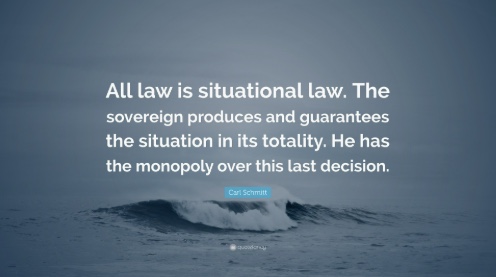
Thiel understands this. He frames his interest in the Antichrist as part of his own “political theology,” a term he borrows from Carl Schmitt, a Nazi philosopher who defined the practice of politics as a struggle against an existential enemy, arguing that politics is just religion in disguise. Thiel also draws on René Girard, a Catholic thinker (and one of Thiel’s Stanford professors) who warned that human societies tend to spiral toward violence in a hunt for scapegoats.
“There’s always a question of whether politics is like a market … or is it something like a scapegoating machine, where the scapegoating machine only works if you don’t look into the sausage factory?” Thiel said, during a 2024 talk at Stanford. He explained the mechanism: “If, say, we’re having a lot of conflicts in our village and we have to find some random elderly woman and accuse her of witchcraft so that we’ll achieve some psychosocial unity as a village … this sort of thing doesn’t really work if you’re self-aware.”
Thiel knows these dynamics well, but it’s not clear whether he’s horrified or impressed. His talks stop short of providing solutions. Instead, they meld Schmitt, Girard, and scripture into an incisive meditation on the power of apocalyptic ideas. Thiel positions himself as someone trying to help the world navigate a “narrow path” between Armageddon and Antichrist. But his rhetoric also sketches a playbook for holy war, scapegoating, crisis, and power—since Schmitt famously argued that power consolidates during existential crises, when constitutions can be suspended.
“We’re told that there’s nothing worse than Armageddon, but perhaps there is,” said Thiel during a talk at Oxford in 2023. “Perhaps we should fear the Antichrist, perhaps we should fear the one-world totalitarian state more than Armageddon.”
He is already experimenting with this doomsday script: In January, he wrote an op-ed framing Donald Trump’s return to power as an “apokálypsis”—an “unveiling” of hidden truth and a chance to cleanse the nation’s “sins.” And in his religion talks, Thiel does not hesitate to name potential Antichrists, including Greta Thunberg, communism, and even tech regulation. This reveals a telling urge to wield scripture as political weaponry.
Yet his approach has major flaws. For example, Thiel claims the Antichrist will be someone focused on existential threats and apocalypse, and who will usher in a totalitarian world government under the slogan of “peace and safety.” But Thiel’s Antichrist checklist—a paranoid obsession with apocalypse, control, and surveillance—describes Thiel himself.
Thiel co-founded Palantir, a software company literally named after an all-seeing orb controlled by an evil wizard in The Lord of the Rings. Palantir is partnering with the Trump administration to supercharge government surveillance at a moment when the president openly embraces authoritarianism. The irony is so striking it almost seems like a confession. As comedian Tim Dillon quipped on Joe Rogan’s podcast recently: “It’s so strange.… You build domestic surveillance technology to surveil our friends and neighbors—and then your other pet passion is the Antichrist.”
Thiel isn’t alone in mimicking religious themes. Billionaire Nicole Shanahan recently declared Burning Man “demonic,” while Andreessen Horowitz partner Katherine Boyle has invoked Christ’s crucifixion to argue that governments destroy families. Trae Stephens, a Thiel ally and self-proclaimed “arms dealer” who co-founded the drone warfare company Anduril (another warped Lord of the Rings reference), frames his work as part of a quest to “carry out God’s command to bring his Kingdom to earth as it is in Heaven.” Stephens’s wife, Michelle, co-founded ACTS 17 Collective (Acknowledging Christ in Technology and Society), which evangelizes to tech workers and is hosting Thiel’s Antichrist lectures.
Thiel is not a theologian, scholar, or prophet. So why pay attention to his biblical musings? Because Thiel is one of the world’s most influential men and his Antichrist speeches reveal his deep belief that religion is a weapon for political warfare—and he’s right.
Thiel’s Antichrist fixation fits a long tradition in American politics. Since the nation’s founding, Americans have sought to name the Antichrist—usually by pointing the finger at their political enemies. “The symbol of the Antichrist has played a surprisingly significant role in shaping Americans’ self-understanding,” wrote historian Robert Fuller in 1995’s Naming the Antichrist: The History of an American Obsession. “Because they tend to view their nation as uniquely blessed by God, they have been especially prone to demonize their enemies.”
Over time, the identity of Satan’s Little Helper has shifted from Native Americans to Communists, Hitler and Saddam Hussein and Barack Obama—even barcodes and microchips have been implicated. From colonial days to the AI era, the hunt for the Antichrist continues. Today’s QAnon conspiracy theorists believe they are battling a cabal of cannibalistic Satanists. Unhumans, a 2024 book praised by JD Vance, equated progressives with bloodthirsty “unhuman” creatures. This turns politics into a zero-sum holy war.
“Once we label our adversaries in these cosmic terms—all good versus all evil—now there’s going to be no compromise,” said Fuller.
Thiel understands this. He frames his interest in the Antichrist as part of his own “political theology,” a term he borrows from Carl Schmitt, a Nazi philosopher who defined the practice of politics as a struggle against an existential enemy, arguing that politics is just religion in disguise. Thiel also draws on René Girard, a Catholic thinker (and one of Thiel’s Stanford professors) who warned that human societies tend to spiral toward violence in a hunt for scapegoats.
“There’s always a question of whether politics is like a market … or is it something like a scapegoating machine, where the scapegoating machine only works if you don’t look into the sausage factory?” Thiel said, during a 2024 talk at Stanford. He explained the mechanism: “If, say, we’re having a lot of conflicts in our village and we have to find some random elderly woman and accuse her of witchcraft so that we’ll achieve some psychosocial unity as a village … this sort of thing doesn’t really work if you’re self-aware.”
Thiel knows these dynamics well, but it’s not clear whether he’s horrified or impressed. His talks stop short of providing solutions. Instead, they meld Schmitt, Girard, and scripture into an incisive meditation on the power of apocalyptic ideas. Thiel positions himself as someone trying to help the world navigate a “narrow path” between Armageddon and Antichrist. But his rhetoric also sketches a playbook for holy war, scapegoating, crisis, and power—since Schmitt famously argued that power consolidates during existential crises, when constitutions can be suspended.
“We’re told that there’s nothing worse than Armageddon, but perhaps there is,” said Thiel during a talk at Oxford in 2023. “Perhaps we should fear the Antichrist, perhaps we should fear the one-world totalitarian state more than Armageddon.”
He is already experimenting with this doomsday script: In January, he wrote an op-ed framing Donald Trump’s return to power as an “apokálypsis”—an “unveiling” of hidden truth and a chance to cleanse the nation’s “sins.” And in his religion talks, Thiel does not hesitate to name potential Antichrists, including Greta Thunberg, communism, and even tech regulation. This reveals a telling urge to wield scripture as political weaponry.
Yet his approach has major flaws. For example, Thiel claims the Antichrist will be someone focused on existential threats and apocalypse, and who will usher in a totalitarian world government under the slogan of “peace and safety.” But Thiel’s Antichrist checklist—a paranoid obsession with apocalypse, control, and surveillance—describes Thiel himself.
Thiel co-founded Palantir, a software company literally named after an all-seeing orb controlled by an evil wizard in The Lord of the Rings. Palantir is partnering with the Trump administration to supercharge government surveillance at a moment when the president openly embraces authoritarianism. The irony is so striking it almost seems like a confession. As comedian Tim Dillon quipped on Joe Rogan’s podcast recently: “It’s so strange.… You build domestic surveillance technology to surveil our friends and neighbors—and then your other pet passion is the Antichrist.”
Thiel isn’t alone in mimicking religious themes. Billionaire Nicole Shanahan recently declared Burning Man “demonic,” while Andreessen Horowitz partner Katherine Boyle has invoked Christ’s crucifixion to argue that governments destroy families. Trae Stephens, a Thiel ally and self-proclaimed “arms dealer” who co-founded the drone warfare company Anduril (another warped Lord of the Rings reference), frames his work as part of a quest to “carry out God’s command to bring his Kingdom to earth as it is in Heaven.” Stephens’s wife, Michelle, co-founded ACTS 17 Collective (Acknowledging Christ in Technology and Society), which evangelizes to tech workers and is hosting Thiel’s Antichrist lectures.
Meanwhile in Russia, Alexander Dugin—an ultranationalist philosopher and propagandist known as “Putin’s brain”—is the only other major political figure who fixates on the Antichrist as much as Thiel. In Dugin’s version, Russia is at war with the Antichrist, which is liberal modernity emanating from the “country of apocalypse”—the United States.
Not everyone is convinced by Silicon Valley’s pivot to piety. At the National Conservatism Conference this month, some traditional religious conservatives railed against their would-be tech brethren. Conservative firebrand Geoffrey Miller blasted artificial intelligence developers as “betrayers of our species” and “apostates to our faith,” calling for what The Verge described as a “literal holy war” against tech.
After all, if we’re hunting for existential enemies, Silicon Valley’s diabolically greedy tech billionaires—who wish to create “godlike” AI systems powerful enough to destroy humanity—top the list. But we must avoid falling into the Antichrist name-calling trap. Instead of asking, “Who is the Antichrist?” we must ask, “Why is a tech billionaire trying to convince us we’re on the brink of apocalypse?”
These rehashed Satanic panic tactics must be exposed for what they are: a cynical ploy to further inflame political divisions. It also seems like an awkward effort to cement an alliance with religious nationalists in the Republican Party, who also use apocalyptic language to frame their political goals. Journalist Matthew D’Ancona described Thiel’s Antichrist theories as a “highbrow version of MAGA End-Times theology.”
But naming the Antichrist is a dangerous tactic that often leads to crisis and violence.
“The whole concept of the Antichrist … fosters a crisis mentality,” said Fuller, the Antichrist historian. “And with the crisis mentality, now we put aside all other differences. There’s a tribal cohesion, a tribal unity, and it justifies even immoral acts because, to defeat an evil enemy, a Satanic enemy, you must do whatever is necessary.”
Thiel is not a theologian, scholar, or prophet. So why pay attention to his biblical musings? Because Thiel is one of the world’s most influential men and his Antichrist speeches reveal his deep belief that religion is a weapon for political warfare—and he’s right.
Thiel’s Antichrist fixation fits a long tradition in American politics. Since the nation’s founding, Americans have sought to name the Antichrist—usually by pointing the finger at their political enemies. “The symbol of the Antichrist has played a surprisingly significant role in shaping Americans’ self-understanding,” wrote historian Robert Fuller in 1995’s Naming the Antichrist: The History of an American Obsession. “Because they tend to view their nation as uniquely blessed by God, they have been especially prone to demonize their enemies.”
Over time, the identity of Satan’s Little Helper has shifted from Native Americans to Communists, Hitler and Saddam Hussein and Barack Obama—even barcodes and microchips have been implicated. From colonial days to the AI era, the hunt for the Antichrist continues. Today’s QAnon conspiracy theorists believe they are battling a cabal of cannibalistic Satanists. Unhumans, a 2024 book praised by JD Vance, equated progressives with bloodthirsty “unhuman” creatures. This turns politics into a zero-sum holy war.
“Once we label our adversaries in these cosmic terms—all good versus all evil—now there’s going to be no compromise,” said Fuller.
Thiel understands this. He frames his interest in the Antichrist as part of his own “political theology,” a term he borrows from Carl Schmitt, a Nazi philosopher who defined the practice of politics as a struggle against an existential enemy, arguing that politics is just religion in disguise. Thiel also draws on René Girard, a Catholic thinker (and one of Thiel’s Stanford professors) who warned that human societies tend to spiral toward violence in a hunt for scapegoats.
“There’s always a question of whether politics is like a market … or is it something like a scapegoating machine, where the scapegoating machine only works if you don’t look into the sausage factory?” Thiel said, during a 2024 talk at Stanford. He explained the mechanism: “If, say, we’re having a lot of conflicts in our village and we have to find some random elderly woman and accuse her of witchcraft so that we’ll achieve some psychosocial unity as a village … this sort of thing doesn’t really work if you’re self-aware.”
Thiel knows these dynamics well, but it’s not clear whether he’s horrified or impressed. His talks stop short of providing solutions. Instead, they meld Schmitt, Girard, and scripture into an incisive meditation on the power of apocalyptic ideas. Thiel positions himself as someone trying to help the world navigate a “narrow path” between Armageddon and Antichrist. But his rhetoric also sketches a playbook for holy war, scapegoating, crisis, and power—since Schmitt famously argued that power consolidates during existential crises, when constitutions can be suspended.
“We’re told that there’s nothing worse than Armageddon, but perhaps there is,” said Thiel during a talk at Oxford in 2023. “Perhaps we should fear the Antichrist, perhaps we should fear the one-world totalitarian state more than Armageddon.”
He is already experimenting with this doomsday script: In January, he wrote an op-ed framing Donald Trump’s return to power as an “apokálypsis”—an “unveiling” of hidden truth and a chance to cleanse the nation’s “sins.” And in his religion talks, Thiel does not hesitate to name potential Antichrists, including Greta Thunberg, communism, and even tech regulation. This reveals a telling urge to wield scripture as political weaponry.
Yet his approach has major flaws. For example, Thiel claims the Antichrist will be someone focused on existential threats and apocalypse, and who will usher in a totalitarian world government under the slogan of “peace and safety.” But Thiel’s Antichrist checklist—a paranoid obsession with apocalypse, control, and surveillance—describes Thiel himself.
Thiel co-founded Palantir, a software company literally named after an all-seeing orb controlled by an evil wizard in The Lord of the Rings. Palantir is partnering with the Trump administration to supercharge government surveillance at a moment when the president openly embraces authoritarianism. The irony is so striking it almost seems like a confession. As comedian Tim Dillon quipped on Joe Rogan’s podcast recently: “It’s so strange.… You build domestic surveillance technology to surveil our friends and neighbors—and then your other pet passion is the Antichrist.”
Thiel isn’t alone in mimicking religious themes. Billionaire Nicole Shanahan recently declared Burning Man “demonic,” while Andreessen Horowitz partner Katherine Boyle has invoked Christ’s crucifixion to argue that governments destroy families. Trae Stephens, a Thiel ally and self-proclaimed “arms dealer” who co-founded the drone warfare company Anduril (another warped Lord of the Rings reference), frames his work as part of a quest to “carry out God’s command to bring his Kingdom to earth as it is in Heaven.” Stephens’s wife, Michelle, co-founded ACTS 17 Collective (Acknowledging Christ in Technology and Society), which evangelizes to tech workers and is hosting Thiel’s Antichrist lectures.
Meanwhile in Russia, Alexander Dugin—an ultranationalist philosopher and propagandist known as “Putin’s brain”—is the only other major political figure who fixates on the Antichrist as much as Thiel. In Dugin’s version, Russia is at war with the Antichrist, which is liberal modernity emanating from the “country of apocalypse”—the United States.
Not everyone is convinced by Silicon Valley’s pivot to piety. At the National Conservatism Conference this month, some traditional religious conservatives railed against their would-be tech brethren. Conservative firebrand Geoffrey Miller blasted artificial intelligence developers as “betrayers of our species” and “apostates to our faith,” calling for what The Verge described as a “literal holy war” against tech.
After all, if we’re hunting for existential enemies, Silicon Valley’s diabolically greedy tech billionaires—who wish to create “godlike” AI systems powerful enough to destroy humanity—top the list. But we must avoid falling into the Antichrist name-calling trap. Instead of asking, “Who is the Antichrist?” we must ask, “Why is a tech billionaire trying to convince us we’re on the brink of apocalypse?”
These rehashed Satanic panic tactics must be exposed for what they are: a cynical ploy to further inflame political divisions. It also seems like an awkward effort to cement an alliance with religious nationalists in the Republican Party, who also use apocalyptic language to frame their political goals. Journalist Matthew D’Ancona described Thiel’s Antichrist theories as a “highbrow version of MAGA End-Times theology.”
But naming the Antichrist is a dangerous tactic that often leads to crisis and violence.
“The whole concept of the Antichrist … fosters a crisis mentality,” said Fuller, the Antichrist historian. “And with the crisis mentality, now we put aside all other differences. There’s a tribal cohesion, a tribal unity, and it justifies even immoral acts because, to defeat an evil enemy, a Satanic enemy, you must do whatever is necessary.”
Not everyone is convinced by Silicon Valley’s pivot to piety. At the National Conservatism Conference this month, some traditional religious conservatives railed against their would-be tech brethren. Conservative firebrand Geoffrey Miller blasted artificial intelligence developers as “betrayers of our species” and “apostates to our faith,” calling for what The Verge described as a “literal holy war” against tech.
After all, if we’re hunting for existential enemies, Silicon Valley’s diabolically greedy tech billionaires—who wish to create “godlike” AI systems powerful enough to destroy humanity—top the list. But we must avoid falling into the Antichrist name-calling trap. Instead of asking, “Who is the Antichrist?” we must ask, “Why is a tech billionaire trying to convince us we’re on the brink of apocalypse?”
These rehashed Satanic panic tactics must be exposed for what they are: a cynical ploy to further inflame political divisions. It also seems like an awkward effort to cement an alliance with religious nationalists in the Republican Party, who also use apocalyptic language to frame their political goals. Journalist Matthew D’Ancona described Thiel’s Antichrist theories as a “highbrow version of MAGA End-Times theology.”
But naming the Antichrist is a dangerous tactic that often leads to crisis and violence.
“The whole concept of the Antichrist … fosters a crisis mentality,” said Fuller, the Antichrist historian. “And with the crisis mentality, now we put aside all other differences. There’s a tribal cohesion, a tribal unity, and it justifies even immoral acts because, to defeat an evil enemy, a Satanic enemy, you must do whatever is necessary.”
(Carl Schmitt quote, his “sovereign” was A. Hitler)
Last week, in the hours after Charlie Kirk’s assassination, the words “demon” and “evil” trended on X as some on the right portrayed his murder as the work of supernaturally possessed Democrats and leftists. Major right-wing influencers echoed Carl Schmitt’s ideas, calling for a political crackdown on Kirk’s critics. Chris Rufo, a prominent right-wing propagandist, called on law enforcement to “infiltrate, disrupt, arrest, and incarcerate” the “radical left.”
This is where apocalyptic rhetoric always leads. When political opponents become evil, cosmic enemies, persecution, and violence become a sacred duty. This surge in demon and devil talk showed that Thiel has correctly identified a potent but perilous impulse in our politics.
But if tech billionaires seek to spread Christianity, they should stop hunting Antichrists and reflect on the words of Jesus Christ, who urged his followers to practice empathy and forgiveness and to care for people rather than exploit and surveil them. Instead of worrying about Armageddon, Thiel should heed the Gospels, which warn that “it is easier for a camel to go through the eye of a needle than for a rich man to enter the kingdom of God.”
Now there’s scripture worth dwelling on—and it’s a problem that no AI, no surveillance, no power, no money can fix.
Donald Trump is a gift to science that allows us to better understand a variety of mental illnesses, how cults work, and the effectiveness of gaslighting.
The greatest presidents in American history had a lasting impact on the country and the world. The four Founding Fathers who served in the White House gave other countries a blueprint for making democracy work, Abraham Lincoln ended slavery, and Franklin D. Roosevelt returned prosperity to the US and helped end World War II.
But what about the awesomest president of them all (by his own account)? What will Donald Trump’s legacy be?
We believe that, ultimately, he will be remembered as a president who advanced science like no other… not as a champion of it but rather as an example of how various mental illnesses manifest themselves, as a case study on how gaslighting works, and how even a complete idiot with no discernible skills (other than a knack for conning people) can start a cult.
In other words, Trump is a gift to future generations of psychologists and social scientists that will keep on giving.
The former president likes to shower himself and his “accomplishments” with superlatives. In this case, they may actually be deserved.
Trump is probably the most prominent narcissist in history. As we have pointed out, he exhibits every symptom of this mental illness.
He deserves the title “Greatest of All Narcissists” (which is something all of them would aspire to) not only because he became the world’s most powerful person but also because he is so omnipresent and displays every symptom all the time.
Since most of his life has been well documented, researchers might be able to better understand any number of psychological disorders because of him.
Are people born as malignant narcissists or do they turn into them? Do they get worse over time? If so, why? Are there triggering events or is that a gradual process? Did Trump’s daddy issues have something to do with how he turned out?
These are all fascinating questions for experts that have not been answered conclusively.
What about being a compulsive liar? There has never been anybody who has lied as publicly and prolifically as Trump. Sometimes, it seems as though he lies only for the sake of lying. The former president lies both when it benefits him and when it doesn’t.
But does he even consider it lying, or does he just live in a fantasy world in which the things he says are true?
Is the compulsive lying linked to his other mental disorders, like the narcissism or his delusions of grandeur? Sometimes, it certainly seems like it. Many of his lies are tied to the compulsion to be best or to be right. Still, others are not.
Again, this will keep researchers busy for decades. And, when it is all said and done, maybe we can understand liars better.
And, while Fox News is a propaganda network from our perspective, for sociologists it might as well be a 24-hour webcam broadcasting from the inside of a cult. This is unprecedented and could answer questions explaining religious fanaticism, nationalist movements, and more.
That is Trump’s true legacy… and he deserves some recognition for his contributions to science.
Sadly, there is no Nobel Prize for being the best case study for a mental illness.
In addition, even though there are those (including Trump himself), who want to bestow traditional post-presidential honors upon him, these seem inappropriate and insufficient.
You can’t name a bunch of elementary schools after a guy who is so clearly an imbecile (to be fair, if you knew beforehand which schools would be shot up, it would be great to name those after Republicans).
And, even though GOP lawmakers want to change Dulles International Airport to Trump International Airport, that hardly seems fitting since the former president once ran an airline into the ground.
So, what to do?
To cement his place in history, it would seem most appropriate to name one of his mental illnesses after Trump. But which one?
The lying? Probably not. “Compulsive Trumping” sounds a bit… clunky.
What about narcissism? Now we are onto something.
First, let’s consider where the term comes from. In Greek mythology, Narcissus was so smitten by himself that he could love no other.
But Trump far eclipses that beautiful Greek boy in terms of vanity.
Not only is he the best at everything, but, at 6’3” and 215 lbs, he also has the body of a Roman god?
Poor Narcissus, so absorbed with his own image in the water (mirrors hadn’t been invented yet), that he was condemned to view himself as his life ebbed away. At least he didn’t choose to inflict his image upon others.
Therefore, it’s time for Narcissus to make way for somebody even more self-absorbed.
We suggest: Donald Trump’s Disease.
Just as Lou Gehrig is now better known for the eponymous illness than his Hall of Fame baseball career, it would be appropriate for future generations to know Trump as the poster manchild for narcissism.
Malignant Trump’s Disease does have a nice ring to it, and it seems like a fitting tribute to a man who will allow scientists to advance the study of mental disorders like no other.
Author
Klaus Marre is a senior editor for Politics and director of the Mentor Apprentice Program at WhoWhatWhy. Follow him on Twitter @KlausMarre.
(Empires, wherever they existed, had certain common characteristics):
Emperors, whether conspicuously insane and angry/paranoid (Caligula, Nero, Ivan “the terrible”) or, in some cases, relatively amiable and approachable, were consumed by the need to perpetuate, defend and expand the boundaries of the Empire.
In order to accomplish this mandate, Empires required outsize expensive standing armies and navies, fueled by priority demands on the treasury of the country, and an endless supply of male citizens of acceptable levels of mental and physical health obliged to be available from the age of 18 to 55.
Patrilineal succession was the usual way for Emperors to keep power within the family, with exceptions within the inner circle involving poisons and assassinations altering course to competing patrilineal lines or even Empresses—Elizabeth and Catherine of Russia—Elizabeths I and II, Victoria of England. Citizens of the Empire had no say whatever in the selection of their leaders at any level.
HOW “IMPERIUM” IN THE US, 2024, TOOK ROOT
Friedrich Trump, trained as a barber, left his family home in Kallstadt, Germany in 1885, obtained a steerage ticket and joined the 1.8 million Germans who emigrated to the US, settling initially in New York City pursuing the barber trade. His motive for leaving Germany had to do with the requirement of Imperial Germany that male citizens of sound mind and body commit to 2 years of compulsory military service.
Life in the chaos and overcrowding resulting from huge numbers of immigrants settling in NYC did not agree with Frederick, so after 6 years he managed to join the long trek to the west coast and the opportunities presented by desperate gold rush participants.
First in Seattle and later in the chaos of the Klondike Gold Rush, Friedrich (later anglicized to Frederick) engaged in various business ventures such as restaurants and brothels-both in high demand where money flowed like water and “anything goes” was the norm.
As the “gold fever” died off along with the lure of profits from gambling, prostitution and extortionate prices for supplies for gold seekers, Frederick gathered up his wealth and planned to live the rest of his life not as a struggling barber but a member of the property owning “gentry” of his home town (Kallstadt, Bavaria) in Germany.
For a time, Frederick, now with wife, property and standing in his home town, looked ahead to launching a family and a comfortable life going forward.
The Bavarian Palatinate authorities, however, would not let him. They claimed he had left Germany as an illegal emigrant, evading taxes and the compulsory two-year military service. Frederick pleaded that he and Elisabeth were “loyal Germans and stand behind the high Kaiser and the mighty German Reich”. It was all to no avail.
Before the bureaucracy could mobilize its police powers to carry out the penalties due an “illegal alien”, Frederick liquidated what he could and, with his new bride and what he could carry boarded another ship to the US with, at the time, only cursory medical checks and paperwork at Ellis Island for west European immigrants with provable assets.
Frederick Trump and his bride arrived in NYC at the peak of a real estate frenzy extending into the cities outer boroughs. So instead of going further west, Frederick’s assets went into apartments and commercial properties in the city. Eventually, a son was born, Frederick Christ Trump. All was well until Frederick Senior died of the Spanish Flu in 1918, leaving his wife and son, 15 years old. Frederic C. and his mother managed to keep the family business going until Junior was old enough to take over full management responsibilities.
(Looking ahead to Donald J. Trump’s 2015 campaign for President, largely based on immigration fears. It’s worth noting that the Trump family was, upon the US entry into World War I, threatened along with many other immigrants from Germany who were referred to as “enemy aliens” to such an extent that some were murdered and assaults on the street were common. As a result, Frederick Trump’s family began to claim that they hailed from Sweden instead.)
Donald’s father Fred continued to invest heavily in New York real estate, laying the foundations for today’s business empire.
He eventually had a management team with which he could enjoy the fruits of wealth, including a visit to Scotland during which he met Mary, a maid, then employed at the Andrew Carnegie estate in Scotland. Courtship and marriage took place, after which, eventually, 4 children were born, the last of whom in 1946 was Donald John Trump.
Over time Frederick C.’s management team activities got the attention of the Manhattan District Attorney for various shady practices and links with criminal organizations. Clearly however, Junior’s skill at marshalling permits, materials and contractors for the construction of new buildings got the attention of the War Department which was faced with the need to speedily get housing built for workers at defense plants all over the country during World War II, so a deal was struck to relax Trump’s legal issues while he was engaged in constructing worker housing.
Not to mention the princely sums paid Frederick C. during the worker’s housing construction. It’s been remarked upon that this government project was the foundation of the Trump Organization’s rapid acquisition of power and wealth in Queens Borough, New York City.
Junior’s eldest son Frederick Christ Trump Jr. had been groomed by his father to succeed him in managing the Trump Organization, but was unhappy with the practices and associations with organized crime his father employed and resisted having anything to do with them. Aviation was his “independence” card, as he trained, and pursued a career as a pilot with Trans World Airlines.
Unfortunately the unrelenting pressure his father applied to abandon his aviation career and take the reins of the Trump Organization took its toll, causing Frederick Junior to eventually become an alcoholic and forfeit his pilot certifications, causing his early death at 42. This left Donald J. as the only male heir left as Frederick Sr. descended into early onset Alzheimer’s disease. Donald J. made a great show of concern for his father, while at the same time being mentored by daddy’s Mafia lawyer, Roy Cohn.
When Donald J. took the reins of the Trump Organization officially, one of his first acts was to try to deprive the family of his elder brother of their share of the inheritance by, among other things, cutting his nephew, suffering from a variety of health issues, out of the corporate health plan to which the family was entitled. The psychologist Mary Trump, Donald J.’s niece and sister of the nephew mentioned, was often quoted during the 2024 campaign as trying to alert the public of the danger of allowing Donald J. another chance at the Presidency. Unfortunately her warnings were not heeded by the voters.
The irony here is that Donald J.’s grandfather fled Imperial Germany, only to wind up with a grandson who, according to all indications seeks to create an Imperial regime on the smoking ruins of Constitutional Republic we have, up to now enjoyed.
Addendum
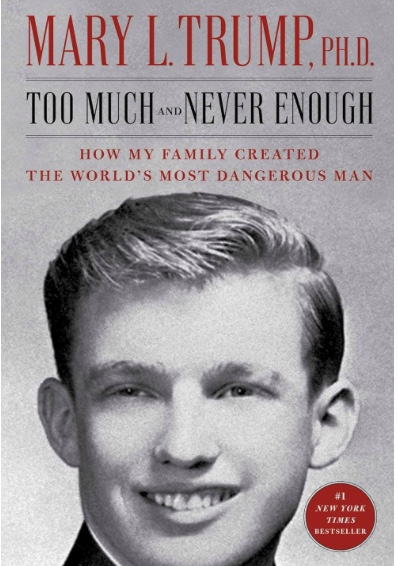
Dr. Mary Trump published a book, ominously titled, “Too Much and Never Enough: How My Family Created the World’s Most Dangerous Man.”
Most readers won’t need any more clues about her subject – her uncle, President Trump. But those who do could consult the cover, which features a photo of a young Trump before he became the figure who now lumbers upon the world stage and lurks in so many nightmares.
Three and a half years into the Trump era, endless words have been spent illustrating the chaotic and cruel personality that can, to cite just one example, schedule a huge ego-gratifying rally in the middle of a deadly Covid pandemic caused by a viciously contagious virus.
According to her publisher, Mary Trump will bring her special perspective – insider, psychologist, writer – to bear on incidents and information never before revealed.
Trump isn’t aging well
Having devoted years to the study of the man and the Trump clan, I can say that the bits teased so far suggest that Mary Trump has the goods. To begin with, she’s the daughter of the President’s eldest sibling, Fred Trump Jr., who may have been the original victim of Donald Trump’s bullying.
As publisher Simon and Schuster put it: “She recounts in unsparing detail everything from her uncle Donald’s place in the family spotlight and Ivana’s penchant for regifting, to her grandmother’s frequent injuries and illnesses and the appalling way Donald, Fred Trump’s favorite son, dismissed and derided him when he began to succumb to Alzheimer’s.”
Warm and easygoing, Frederick Junior was, by all accounts, ill-suited to play the role of cutthroat real estate baron, which was what his father expected of him. Happy to step in, Donald did all he could to prove that he was the more deserving son.
When Fred Jr. finally ceded first position among the heirs to the family business, he became an airline pilot. Donald mocked his profession. “What’s the difference between what you do,” he would ask, “and driving a bus?”
After Fred Jr. died at age 42 from complications of alcoholism, Donald turned his death into an object lesson that reflected well on himself. Donald pointedly abstained from tobacco and alcohol because of his brother’s struggle, saying, “I watched him. And I learned from him.”
The cruelty didn’t stop with Fred Jr.’s death in 1981. Later, when the paterfamilias Fred Trump Sr. died, heirs learned that his will distributed his estate among his children and their offspring “other than my son Fred C. Trump Jr.” The children of Fred Jr. sued, noting that an earlier will, written prior to Fred Sr. being diagnosed with dementia, had granted them proper shares.
Soon after the suit was filed, Donald changed a health insurance policy, taking away coverage for a disabled infant born to Fred’s own son, Fred III. (A second telling anecdote from author Harry Hurt III, who has written about the Trumps, describes Donald briefly considering evicting his brother and sisters from their rent-free homes in a Trump building unless they paid cash for the property.)
When asked in 2000 whether withdrawing the child’s insurance was cold-hearted, the man who claimed to be a billionaire said, “I can’t help that. It’s cold when someone sues my father.”
The suit was settled and the baby was again insured, but 16 years later, when he was running for president, Donald Trump seemingly had no regrets. Asked about the incident, he said, “I was angry because they sued.”
For those who know the family lore, the circle is completed by a little anecdote published in Hurt’s 1993 book “Lost Tycoon.” Hurt reports overhearing Fred Trump Sr. talking about his son Donald and his wife Mary flying off together. “I hope their plane crashes,” said Fred, adding that then “all my problems will be solved.”
Reports on the upcoming book suggest that the author will share juicy stories she learned from the President’s sister, Maryanne Barry. It wouldn’t be the first time that Barry, perhaps inadvertently, revealed something true about her brother. Speaking with writer Gwenda Blair in 1990, Barry shared a story about when Donald was a young man and turned a game of catch with Barry’s seven year-old son into a cruel contest.
“Donald kept throwing it faster and faster, harder and harder, until I hear this crack and the ball hit David’s head. Donald had to beat the seven year-old.”
This cold-hearted nature followed him into his political career. As president, Donald Trump has treated the children of asylum-seeking immigrants with great cruelty, separating them from their parents and locking them in cages. During our current pandemic, with over 116,000 dead in the US and more succumbing every hour, he has been so cavalier as to advocate dangerous unproven cures.
The biographer quoted below is Michael D’Antonio, a former journalist for Newsday and the author of The Truth About Trump. “In my own experience as a Trump biographer I have answered questions about the origins of the President’s weird ways by citing both genetics and his upbringing. This nature-and-nurture answer is a bit of a cop-out, but it is the best I have been able to muster after studying the man and his family.”
Because she has lived close to the source and possesses real expertise in mental health, Mary Trump’s opinion matters greatly to those seeking answers. I can’t wait to read her book.
Trump’s comments are in line with his vicious verbal attacks on Mexicans and other immigrant groups in the United States. But they betray his own family background. His grandfather, Friedrich Trump, a German, lived a migrant life in the US on the edge of illegality and rejection. During the World War I, he belonged to an immigrant group which was sweepingly labelled the “enemy within” or – in his grandson’s parlance – a Trojan horse.
World War I was not a happy time for German-Americans. They were summarily labelled as “alien enemies” whose true allegiance lay with the Fatherland. Nativist spokesmen agitated against “hyphenated Americans” as potential spies and saboteurs. Use of the German language was seen with suspicion. In contrast to many of their compatriots, the Trumps did not need to anglicise their surname as it worked perfectly in English.
The most notorious case of public violence was the lynching of German immigrant Robert Prager in Illinois. He was tarred and feathered, forced by an agitated crowd to kiss the American flag and sing patriotic songs, and finally hanged from a tree in front of 200 onlookers.
Frederick Trump evaded the fate of Prager, but not the other deadly weapon which swept the world once the war was nearing its end. In 1918 and 1919, Spanish influenza killed between 20m and 50m people worldwide. On a summer’s day in 1918, Frederick returned home from a stroll through New York with his son Fred (Donald’s father), went to bed feeling sick, and passed away the next day.
Paranoid nation
The dangerous mix of paranoia and xenophobia directed against German-Americans during World War I had profound and long-lasting effects. The Alien Enemy Bureau was established in the early days of the war with a brief to identify and arrest disloyal foreigners. It was headed by J. Edgar Hoover, then a young civil servant in the Justice Department. Here he picked up the tools he would use later as all-powerful director of the FBI.
In 1940, the notorious House Un-American Affairs Committee published The Trojan Horse in America, a compendium of domestic organisations believed to work for foreign powers. Chapter titles included “Mussolini’s Trojan Horse in America” and “A Trojan Horse of German War Veterans”.
All this was reason enough for the business-minded Trumps to deny their German heritage, claiming they hailed from Sweden instead. Donald’s father Fred invested heavily in New York real estate, laying the foundations for today’s business empire. It was only from the 1980s that Donald Trump started to stand by his German roots.
Trump’s own grandfather was an illegal emigrant whose income stream included alcohol and prostitution at a time when these were legally contested. He was an unwanted returnee to Germany, and then a potential “enemy alien” within the United States who had declared his loyalty to the German Kaiser – but ultimately made an immense economic contribution spanning generations.
Today, his grandson lambastes Mexicans as criminals, intends to erect a wall to keep them out, and warns of Syrian refugees as Trojan horses. If Donald Trump wins his party’s nomination, historians will have many a field day digging out the contradictions between his anti-immigrant rhetoric and his family background.
Most Serene, Most Powerful Prince Regent! Most Gracious Regent and Lord!
I was born in Kallstadt on March 14, 1869. My parents were honest, plain, pious vineyard workers. They strictly held me to everything good — to diligence and piety, to regular attendance in school and church, to absolute obedience toward the high authority.
After my confirmation, in 1882, I apprenticed to become a barber. I emigrated in 1885, in my sixteenth year. In America I carried on my business with diligence, discretion, and prudence. God’s blessing was with me, and I became rich. I obtained American citizenship in 1892. In 1902 I met my current wife. Sadly, she could not tolerate the climate in New York, and I went with my dear family back to Kallstadt.
The town was glad to have received a capable and productive citizen. My old mother was happy to see her son, her dear daughter-in-law, and her granddaughter around her; she knows now that I will take care of her in her old age.
But we were confronted all at once, as if by a lightning strike from fair skies, with the news that the High Royal State Ministry had decided that we must leave our residence in the Kingdom of Bavaria. We were paralyzed with fright; our happy family life was tarnished. My wife has been overcome by anxiety, and my lovely child has become sick.
Why should we be deported? This is very, very hard for a family. What will our fellow citizens think if honest subjects are faced with such a decree — not to mention the great material losses it would incur. I would like to become a Bavarian citizen again.
In this urgent situation I have no other recourse than to turn to our adored, noble, wise, and just sovereign lord, our exalted ruler His Royal Highness, highest of all, who has already dried so many tears, who has ruled so beneficially and justly and wisely and softly and is warmly and deeply loved, with the most humble request that the highest of all will himself in mercy deign to allow the applicant to stay in the most gracious Kingdom of Bavaria.




 Klaus Marre is a senior editor for Politics and director of the Mentor Apprentice Program at WhoWhatWhy. Follow him on Twitter @KlausMarre.

 KILROY'S WORLD (AT 87)
Recent Comments