
When discovery feels like doom: the return of “mirror life” fearsThe fear of unleashing forces beyond control has haunted science for centuries.
By Thomas MoynihanIn 2020, a small blast ejected debris from the surface of the asteroid Bennu, as it hurtled through space 200 million miles from Earth. This was caused by the NASA spacecraft Osiris-Rex, which collected the resulting dust and returned those samples to Earth, marking the first time a U.S. mission had retrieved material from an asteroid. Earlier this year, researchers found those samples contained the building blocks for life, including amino acids and nucleobases (which form DNA, among other molecules). That’s not unusual for an asteroid, but what was unexpected was the form those molecules took: roughly half of them being a perfect inverse — a mirror image — of the way those building blocks appear on Earth. This was interesting timing. Only a few months prior, toward the end of 2024, a team of Nobel-winning biologists and experts — in a paper published in Nature — had raised the alarm on a potential new threat to all living things on Earth. They warned of the potential creation of “mirror life.” While the naturally occurring mirror molecules hitching a ride on nearby asteroids are not going to have any impact on our home planet, the experts feared that biologists may — in the lab — be able to artificially create entire mirror-image organisms, to potentially disastrous results. Mirror lifeTo understand this, look at your hands. They look alike. But you can’t perfectly overlap them, no matter how you rotate or contort. Hands cannot be confused with their mirror image. It turns out the molecules making up our bodies also have this fundamental asymmetry. They can come in “right-handed” and “left-handed” configurations. For example, our DNA — and the DNA of all other animals in our biosphere — is universally right-handed. This provides excellent evidence that all life on Earth shares one common ancestor. But, as the experts pointed out, there’s no reason life can’t be synthetically manufactured from molecules oriented inversely — hence, “mirror life.” Such life would be molecularly sinister in the original meaning of the term: left-handed. Though the capacity to forge such unprecedented creatures in the lab doesn’t yet exist, it might be developed soon. The fear is mirrored microorganisms: capable of infecting our cells and feeding on them, but also potentially entirely invisible to our immune systems. Such newcomers could rapidly spread through planetary ecosystems, causing “immense” and “irreversible” harm. In the months since, a steady stream of news stories has echoed this warning. But similar fears are far from new. From accidental black holes to worries that chemical experiments might suddenly freeze all Earth’s oceans, this is the story of concerns scientists are on the brink of discovering exotic, deadly new forms of matter or life that might quickly spread, snuffing us out. The idea of mirror life goes back a surprisingly long way. In 1848, the young Louis Pasteur — inventor of pasteurization and rabies vaccination — became the first to notice that organic molecules can come in mirror-image versions. He immediately knew he’d discovered something profound. In 1871’s Through the Looking-Glass, Alice is magically transported to an inverted world. But years before, Pasteur was already anticipating the ways science could make mirrored life a concrete reality. In a 1860 lecture, Pasteur pondered what would happen if the cells of “living beings” could be made to suddenly assume “opposite asymmetry”: If, molecularly speaking, “right” became “left.” This, Pasteur marvelled, might produce “a new world.” The idea never left him. Later in life, at a Parisian lecture, Pasteur again spoke on the possibility of mirrored life. “Who can say,” he queried, “what the future of germs would be” if “we could replace” their proteins with “inverse” versions? Pasteur himself didn’t opine on whether this might threaten existing life, but others were soon expressing unease following his breakthroughs in unlocking life’s chemical secrets. On a spring day in 1869, at a salon on one of Paris’s bustling boulevards, a group of prominent thinkers — including some of Pasteur’s close colleagues — discussed science’s future. Buoyed by the pace of recent discoveries, they issued bold predictions. Going first, the chemist Pierre-Eugène-Marcellin Berthelot — an early proponent of synthetic biology and artificial food — proclaimed that “within a hundred years” humans would understand atoms and, with this, control the power of the Sun itself. (With the invention of thermonuclear weapons in 1952, which harness the same forces as stars, this prediction became hauntingly true.) Following Berthelot, the biologist Claude Bernard offered his own prophecy, announcing that scientists would soon be able to artificially forge new lifeforms. Such comments inspired some present to dream of a future wherein “natural species” are “considered remnants of an aged, inconvenient world.” But other attendees worried, commenting that meddling with “organic laws” would surely provoke the closing of the curtains on the human species. They imagined “old, good God with his white beard” responding by descending to Earth — like a weary bartender announcing last orders — and declaring “Gentlemen, we’re closing!” Five years later, in 1874, the English economist W.S. Jevons produced a chilling image, expressing invention’s potential perils. He imagined “reasoning creatures dwelling in a world” where the atmosphere is “inflammable gas.” If “devoid of fire,” their kind may have persisted for epochs, happily ignorant of the “tremendous forces” a “single spark” could summon. How, Jevons asked, can we know we aren’t in a similar position? A few decades later, one Hungarian science writer commented that when the first electric arc furnaces were developed in the 1890s — capable of producing unprecedented temperatures — no one was sure this wouldn’t ignite the atmosphere: producing, by chain reaction, a “world furnace.” Fears of catastrophically igniting Earth’s atmosphere also hovered around early subatomic experiments, ever since Marie Curie first isolated radium in 1902. But, so too, did fears of synthetic organisms also begin spreading surprisingly early in the previous century. Visions of artificial lifeIn 1905, The New York Times reported that Bernard’s daring dream — of artificial life — had already become reality. It was sensationally relayed that a Cambridge professor had “produced artificial life.” The professor in question was John Butler Burke, who had produced what he thought were self-replicating globules by barraging sterilized beef broth with radium rays. The phenomenon Burke had manufactured turned out to be nothing like biological life, but this and other developments — involving scientists producing organic-looking structures from non-living materials, creating everything from “artificial vegetables” to fungi-like growths — made many think science was on the brink of synthesizing new forms of life. The New York Times article of 1905 also referred to Jacques Loeb, a German-American physiologist who had, in the previous year, declared biology must determine whether it is “possible to produce new species artificially.” By 1906, Loeb was declaring this was now “the goal of biology.” Having pointed out that “the number of species existing today is only an infinitely small fraction of those which can,” he added that nothing indicates “artificial production of living things” is impossible. In 1910, following Loeb’s lead, the French biologist Stéphane Leduc became the first to announce the founding of biologie synthétique, or “synthetic biology.” But others immediately began envisioning the catastrophic potentials of the scientific creation of bizarre new forms of biology. In the same year Leduc introduced the world to the term “synthetic biology,” the Belgian novelist J.-H. Rosny aîné published his surreal 1910 Morte de la Terre. Therein, he imagined progress in chemistry accidentally producing a new “kingdom” of life, genetically unrelated to all previous terrestrial biology. In the story, iron-based lifeforms first appear as “bizarre violet stains” and geometric patterns on human-made alloys. These angular creatures eventually organize into swarms resembling giant mobile ferrofluids, spreading over the landscape, feeding on traditional biology. It results in the rise of a parallel biosphere, which eventually consumes our own, causing human extinction. Matter beyond our controlNot long afterward, in the 1930s, H.G. Wells visited General Electric’s New York headquarters. The company’s chief scientist, the Nobel-winning chemist Irving Langmuir, was tasked with entertaining Wells. Langmuir used his expertise in chemistry to brainstorm sci-fi plot ideas with the celebrated author, suggesting one involving the accidental invention of “a form of ice that was stable at room temperature.” Theoretically, such an unprecedented form of ice, when encountering normal water, could act as a “seed crystal” — converting the entire liquid body into the newer version of H2O, which remains frozen at higher temperatures than before. The idea being that water, in its familiar form, is only metastable: capable of being nudged into a new state that — being more molecularly stable — spreads through all water in contact with the initial “seed.” If such a substance were somehow released into waterways, it could spell global disaster. Wells wasn’t interested, but the idea eventually made its way to the American author Kurt Vonnegut, whose brother had worked with Langmuir. Vonnegut adopted the idea as inspiration for his sardonic 1963 novel Cat’s Cradle. It depicts the invention of just such an unprecedented form of water — called “ice-nine” — which accidentally leaks into the sea, causing the Earth’s oceans to immediately freeze, eventually killing all life. Thankfully, the production of substances like Vonnegut’s “ice-nine” appears physically infeasible, though scientists have indeed created exotic versions, or “phases”, of frozen water in the lab. Nonetheless, other possibilities — imagining the creation of unprecedented forms of matter that can catastrophically spread — have haunted physicists for decades. In 1986, the science magazine Omni claimed that the invention of self-replicating nanobots, capable of feeding off normal biomatter, could rapidly reduce Earth’s entire biosphere to seething, synthetic “gray goo” — provoking reverberating worries in ensuing years. A decade later, the launching of ever-larger particle colliders triggered yet more exotic fears. Could these experiments, it was asked, produce accidental black holes — devouring Earth — or even conditions that might tip the Universe, cataclysmically, into a new physical state? Again, the fear was now that our entire Universe may be metastable: capable of being prodded into a new and stabler state, entirely hostile to life as we currently know it, which would spread outward — propagating at the speed of light — from the initial starting point. This “ultimate catastrophe” came to be known as “vacuum collapse.” Or, similarly, what about production of “strangelets”: hypothesized forms of matter, stabler than any previously extant, that might convert all our ordinary atoms into “stranger” stuff? Again, this would be universally deadly. Some scientists worried such accidents might genuinely threaten our existence. Thankfully, no such scenarios materialized; seemingly, we needn’t worry that current particle colliders will annihilate our Universe. A new chapter in an old fearToday’s concerns about mirror life are serious and should be taken very seriously. Just because a disaster is unprecedented doesn’t mean it cannot happen. That we have been lucky so far — like the “reasoning creatures” imagined, over a century ago, by Jevons — doesn’t mean we always will be. Our probing into the world’s workings and our incessant tinkering with its laws hasn’t uncovered the “single spark” some have feared — the spark that might rapidly spread, snuffing us out — but this doesn’t mean it isn’t out there, silent, waiting to be found. Some might look back at this history, of recurrent fears we are on the brink of creating deadly new forms of matter or life, and conclude that we needn’t worry. We’ve been wrong every time before, after all. But the history of science is also full of failed statements about things that could “never” happen. Writing on future potentials for synthetic biology in 1912, none other than Stéphane Leduc — the scientist who, as previously mentioned, gave the field its name — made precisely this claim. He pointed to his French precursor, Auguste Comte. In 1835, Comte claimed humans ascertaining the chemical composition of stars would forever remain “an obvious and eternal impossibility.” The method for accomplishing precisely this was invented only 24 years later, in the form of spectroscopy. This, as Leduc put it, immediately “made it possible to analyse stars more accurately than we can analyse an egg.” If science can tackle the riddle of the stars, once considered beyond our grasp, it might well one day also tackle the riddle of producing life, Leduc implied. Given that invention’s rapidity hasn’t slackened since Pasteur’s day, it’s important to be abundantly precautious. History shows we are a trepidatiously intrepid species: restless in invention, fearful in result. Indeed, until surprisingly recently, scientists haven’t often given much thought to the wider ramifications and fallouts of research before embarking on it. But noticing this, and acknowledging it, is the first step to acting more thoughtfully — when it comes to probing nature’s perilous potentials — in the future. |
Posts Tagged With: philosophy
Dr. Frankenstein “succeeded” in his experiment, but there were consequences


Gravity as a thought experiment
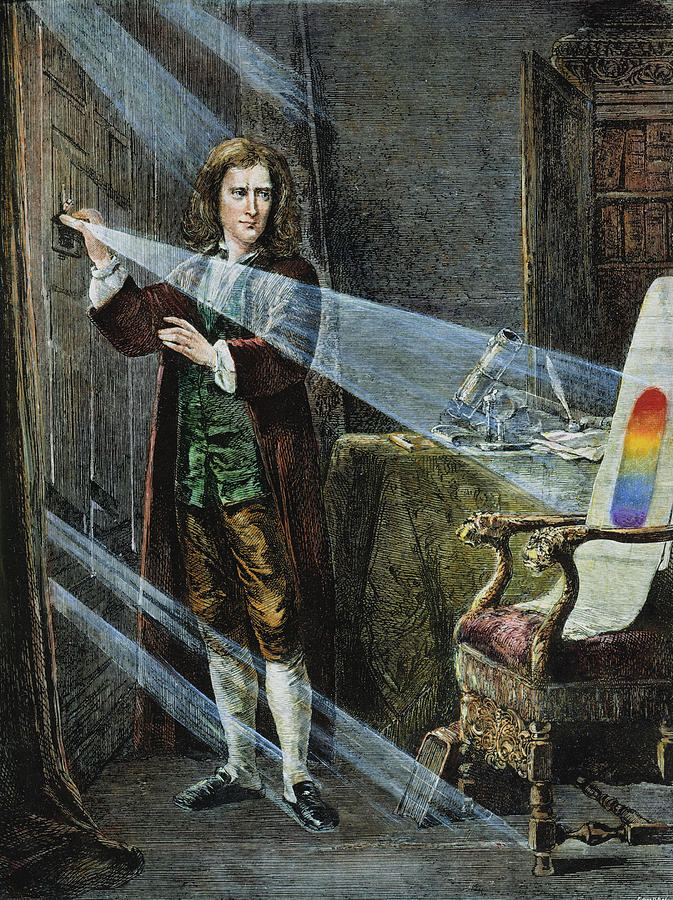
Isaac Newton, Professor at Trinity College, London, fled London to escape the twin catastrophies of a recurrent Bubonic Plague outbreak and the later “Fire of London”. Both of which occurred during a 2 year period, 1665-66, during which a third of London’s population died.
To occupy himself during his self-imposed “lockdown”, he compiled his reflections on gravity and related physical phenomena, in a classic work entitled: PRINCIPIA, the foundation of modern physics.
Gravity and light were key parts of his research interests and speculations. It was two centuries and a fraction later that Albert Einstein proposed that both light and gravity were “wave” phenomena and that both were “bent” as they moved through space. Light had been observed to bend and break up into primary colors and wavelengths long before, but gravity was, and is, a continuing mystery in many aspects, even to Einstein.
(Update on gravity reflection: Do Mirrors for Gravitational Waves Exist?; https://arxiv.org/abs/0903.0661, a report from Cornell University, U.S.A.)
Suppose, during the Covid 19 imposed lockdown, we could focus on phenomena such as gravity, and engage in thought experiments which sometimes lead to breakthroughs in science and understanding of our world.
Like most of us, I’m afraid that human nature during this 2020 pandemic and related political opportunism and disfunction have clouded our minds to the point that distraction would be helpful.
Here Goes:
Suppose that, instead of the usual energy hogging metal boxes we move ourselves around in, we used gravity to gently lift our metal boxes off the surface just enough to eliminate the need for wheels or tracks.
Many of you will recognize that this describes an already studied method of doing this, known as “magnetic levitation”. However, this technology requires enormous amounts of electrical energy and infrastructure to implement and operate, so seems to have receded into the archive of brilliant but impractical schemes. Battery-electric vehicles and gyroscopic power systems have their own well-known obstacles to overcome, and neither can function without specific infrastructure and abundant fixed energy suppliers.
All that would be needed for gravity fueled levitation is a means, attached to the “metal box, something like car with no wheels or engine” which needed to be moved around, to reflect the energy already existing between the box and the earth–up to now securing the box to the earth–back to the earth such that the box is lifted sufficiently to enable frictionless movement.

The beauty of harnessing gravity via reflection/deflection is that, exactly as the gravity field between heavy masses and light ones automatically adjusts to whatever the “metal box” earlier mentioned weighs, sufficient spacing to achieve frictionless travel would depend on how it was focussed rather than a need for external power input. Remember Newton’s determination that, absent air resistance, light bodies fall at the same speed as heavy ones.
Of course, any human inside the box would have in mind a destination, rather than some random amusement ride which could turn into something truly terrifying.
Frictionless movement over a level surface could be enabled by nothing more than, say, the cooling fan or turbine used to displace heat from onboard air conditioning for passengers, for example. Of course, some sort of battery or power source would be needed, since vehicle AC compressors typically require 3 to 5 horsepower to operate. Some type of vane or rudder system would be needed to provide directional control as well.
Braking and wind effects on a frictionless land vehicle would be significant engineering challenges once the forward motion systems are sorted out, but if we were able to harness gravity to lift such a vehicle, perhaps we could use the same force to maintain direction despite wind effects and control momentum (braking).
Most urban travel, except for cities like Pittsburg and San Francisco, is typically on fairly level ground. Hills would obviously be a challenge for frictionless vehicles, so summoning up imaginative solutions for that problem would be additional brain teasers.
My speculation on the “ascent” (hill) challenge is to imagine that harnessed gravity to lift “metal boxes” to enable frictionless movement could possibly be finessed to enable ascent of such a frictionless body, since ascent is a similar challenge to gravity with an added horizontal component.
Have you forgotten about pandemics and politics yet?
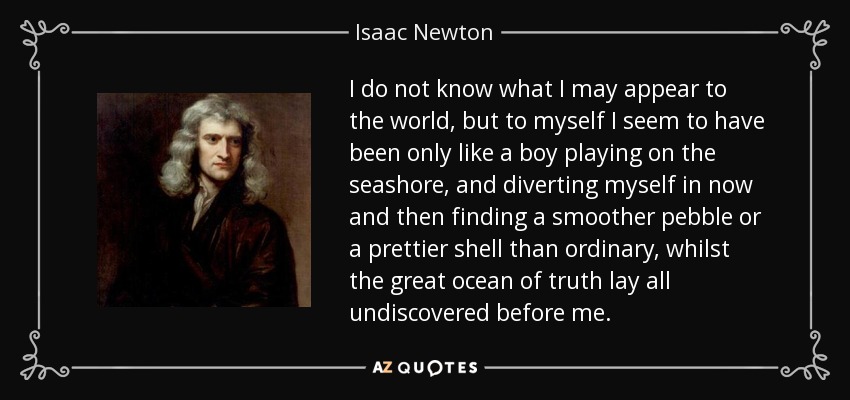
How about a final word from Professor Newton:
 KILROY'S WORLD (AT 87)
Recent Comments